Solar Blankets for Camping
Learn how folding solar blankets work, what equipment they need, and how to size and position one at camp.
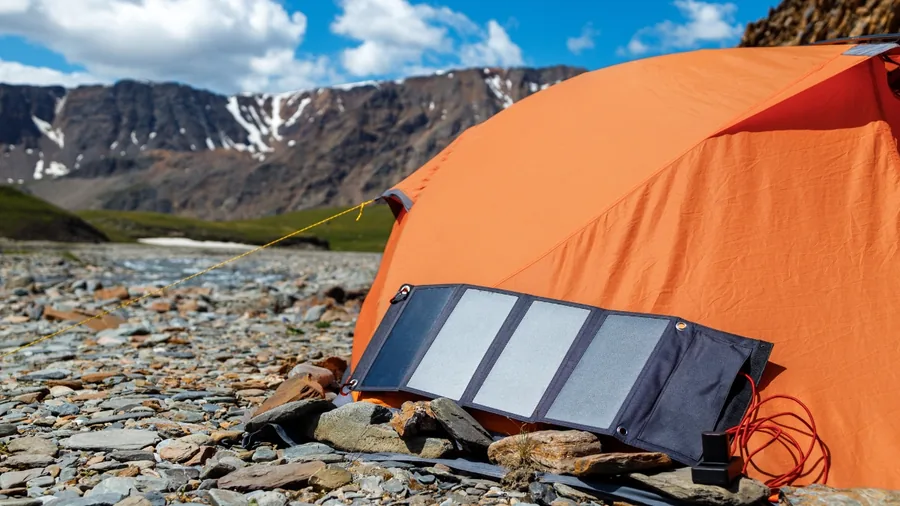
A solar blanket can be a useful addition to a camping setup when you want more generating capacity without storing a large rigid panel in the garage. Unfold it at camp, connect it to compatible charging equipment, and use the daylight to replenish your battery.
Despite the name, it is not a heated blanket and it does not store electricity. It is a portable solar panel built in a folding format. The useful question is whether that format suits your space, power needs, and willingness to move it around during the day.
What Is a Solar Blanket?
A solar blanket uses multiple photovoltaic sections joined in a foldable assembly. The sections pack together for transport, then spread out to provide a larger collection area. Some designs resemble a fabric-backed mat; others have more structure or integrated support.
The word blanket can make the product sound tougher or more flexible than it really is. Solar cells and electrical connections still need careful handling. Fold it only where the design allows, keep weight off the cells, and follow the manufacturer's positioning instructions.
A blanket normally needs a compatible controller or power station to turn its output into suitable battery charging. Check whether that equipment is included rather than assuming the package is ready to clip onto any battery.
Solar Blanket or Folding Suitcase Panel?
A blanket is appealing when packed space is tight. It may fit between camping boxes or behind a vehicle seat more conveniently than a framed panel. That can matter when you also need room for chairs, water, and the cooler.
A framed suitcase panel may be easier to stand at a chosen angle. A blanket can need more thought about where it lies or how it is supported. The better choice depends on your campsite, not just the size of the carrying bag.
If you leave camp during the day, think about whether you want portable equipment unattended. A permanent RV installation has different trade-offs, including the fact that the vehicle itself may be parked in shade.
Choose Wattage From Daily Energy Use
Start by estimating the energy you want to replace each day. A 10W light running for three hours uses 30 Wh. A 15W fan running for four hours uses 60 Wh. Add phone charging and any other loads to build a realistic total.
Suppose your total is 240 Wh per day. With four equivalent full-sun hours and an illustrative 75 percent collection allowance, the calculation is 240 ÷ 4 ÷ 0.75, which gives 80 watts. That is a planning estimate, not a recommendation to buy the smallest possible panel.
Changing the assumption to two full-sun hours doubles the required wattage. Weather, shade, and your actual usage can therefore matter more than a small difference between advertised panel ratings.
A Manufacturer Example
REDARC's 160W monocrystalline solar blanket is one example of the format. Use its published specifications and manual to compare output, folded dimensions, connections, and the required regulator with your own equipment.
A named product is a starting point for comparison, not proof it is best for every camper. The right purchase should fit your battery system and carrying space. Compare the complete cost of cables and charging equipment before deciding that one blanket offers better value than another.
For a broader comparison of portable formats, see our guide to camping solar panels.
Check the Electrical Match
There are two common arrangements: a blanket feeding the solar input of a power station, or a blanket feeding a charge controller connected to a standalone battery. They are not interchangeable without checking the specifications.
Confirm open-circuit voltage, operating voltage, current, polarity, and the connector type. If you already own a power station, start with its input limits. If you own a leisure battery, choose a controller and charging profile appropriate to that battery's chemistry.
Do not connect an unregulated panel straight to a battery simply because the cable includes clamps. Likewise, do not assume two different-brand connectors have the same polarity. Obtain the correct connection information before plugging anything together.
Positioning Makes a Difference
Choose a place with clear sun exposure and a surface that will not damage the blanket. Keep it away from vehicle tyres, walkways, and areas where people will drop equipment. A blanket laid across a busy campsite is easy to trip over or step on.
Do not cover part of it with a bag to stop it blowing away. Shading part of an array can reduce production substantially, depending on the panel's construction. Use only the securing methods recommended for the product.
Check the location as the sun moves. An extension cable may give you more placement options, but it must be suitable for the current and distance involved. Longer cables can introduce voltage drop and become another item to manage around camp.
Keep the Battery Out of the Sun
The panel needs sunlight; the battery generally does not benefit from sitting beside it in direct heat. Position the receiving equipment in a ventilated location within its operating limits, and protect connections as instructed.
Look at what the system is actually collecting if it provides an input display. A low reading may indicate shade, an unfavourable angle, a full battery, or an input limitation. It does not automatically mean the blanket is defective.
Before packing, disconnect in the order specified by the equipment manuals. Remove grit, let the blanket dry, and fold it without trapping leads between sections.
For a vehicle-based setup, use the RV battery charging guide to estimate daily collection needs. The 100Ah battery sizing example shows how the calculation changes with the amount of charge you need to replace.
Frequently Asked Questions
Can a solar blanket charge a phone?
Some provide regulated USB output, while others are designed only for a controller or power station. Check the specific model. For small loads, a dedicated phone charging panel may be more convenient.
Can I leave it outside in rain?
Follow the product's weather rating, including the requirements for its controller and connectors. Do not assume every part of the kit has the same protection.
Will it power the campsite overnight?
Only through stored energy. The blanket collects power during suitable daylight; a compatible battery supplies your equipment after dark. Size both parts around the trip you actually intend to take.