What Size Solar Panel to Charge 100ah Battery?
Calculate solar panel capacity for a 100Ah battery using voltage, charge deficit, daily loads, and available sunlight.
A 100Ah battery does not point to one universal solar panel size. You need to know the battery voltage, how much charge you want to replace, and how much useful sunlight is available. You also need to account for anything that continues using power while charging takes place.
For an illustrative 12V system, replacing half of a nominal 100Ah battery's energy in a day might lead to a 200W planning estimate under favourable assumptions. Replacing a larger deficit or charging in weaker sunlight can require substantially more. Here is how to work out what your setup actually needs.
Convert Amp-Hours to Watt-Hours
Amp-hours describe charge capacity. To estimate nominal energy, multiply amp-hours by nominal voltage. A 12V, 100Ah battery is approximately 1,200 Wh. A 12.8V, 100Ah lithium iron phosphate battery is approximately 1,280 Wh.
A 24V, 100Ah battery contains approximately twice the nominal energy of a 12V, 100Ah battery. That is why an answer based only on 100Ah can be misleading.
Nominal capacity is not necessarily usable capacity. Battery chemistry, condition, temperature, and the manufacturer's discharge recommendations affect what you should plan to take from it. Use the specifications for your actual battery.
Decide How Much You Need to Replace
If a nominal 12V, 100Ah battery has an energy deficit equal to half its nominal capacity, that is approximately 600 Wh. If a 12.8V version has an 80 percent deficit, the calculation gives approximately 1,024 Wh.
Those are arithmetic examples, not advice to discharge every battery to those levels. Your battery may have different recommended operating limits. Charging also requires more input energy than the amount ultimately stored.
Start from the deficit you genuinely expect after a normal day or night. A battery that only supports a few lights needs a different charging plan from one running fans, electronics, and an inverter for hours.
Calculate an Initial Panel Size
A useful planning formula is required energy divided by peak sun hours divided by an allowance for collection and charging losses. For illustration, use four peak sun hours and a 75 percent overall allowance.
Replacing 600 Wh gives 600 ÷ 4 ÷ 0.75, or 200W. Replacing 1,024 Wh gives about 341W. That second example may lead you to compare a suitable array around 350W to 400W, depending on the full design and available products.
These figures are estimates under the stated assumptions. They are not guaranteed one-day recharge sizes. Reduced sunlight, poor orientation, battery charging behaviour, and active loads can all increase the required capacity or charging time.
Add Loads Running During the Day
Suppose your battery needs 600 Wh replaced, but your equipment also consumes 300 Wh while the sun is available. Your collection target becomes approximately 900 Wh before deciding how to account for system losses.
Using the same four-hour and 75 percent assumptions gives 900 ÷ 4 ÷ 0.75, or 300W. Ignoring the active equipment would have understated the requirement by half in this example.
List daily loads separately from the battery deficit to avoid double-counting. If your measured daily energy figure already includes everything you intend to replace, do not add those same loads a second time.
Sunshine Is the Variable You Cannot Pack
Four peak sun hours does not mean four hours between sunrise and sunset. It represents the day's solar energy as an equivalent period at reference intensity. A long day can still produce disappointing results under cloud or shade.
If the example falls to two peak sun hours, the estimated panel requirement doubles. A 200W system sized around a sunny-day assumption may therefore take longer to recover the same battery deficit in less favourable conditions.
Use solar information appropriate to your location and season. For camping, plan around the conditions you are willing to encounter, including a campsite where trees restrict where the panel can be placed.
Match the Controller and Battery
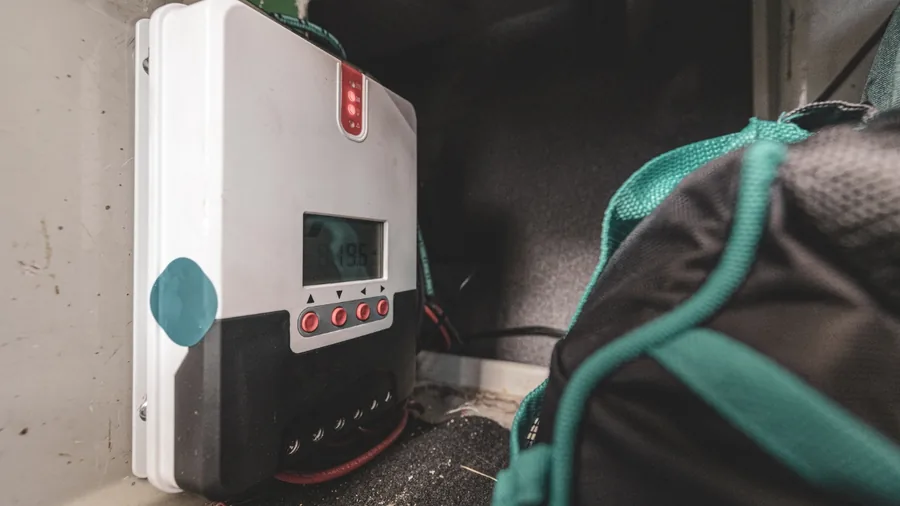
The charge controller must support the battery voltage and chemistry, the array's voltage and current, and the required charging output. Read all of those limits rather than selecting by panel wattage alone.
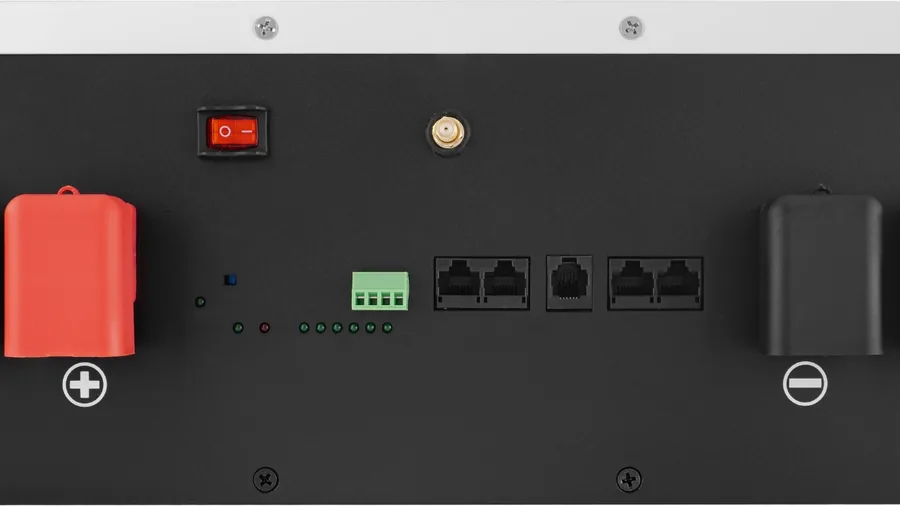
The battery also has a maximum permitted charging current. More solar capacity is only useful within the system's operating limits. An appropriate controller may need a configured current limit or charging profile for the specific battery.
Our guide to sizing a controller for 500W of solar walks through the battery-side current calculation. Use that as background, then confirm the design against your own equipment manuals.
Allow for Charging Behaviour and Temperature
Charging does not always continue at maximum power until the battery reaches full. Some charging stages reduce the current, and battery management systems may impose their own limits. A simple energy calculation cannot describe every stage precisely.
Temperature limits matter too. Some lithium batteries restrict charging in cold conditions, while particular heated models have their own operating instructions. Consult the exact battery manual rather than assuming every lithium battery behaves the same way.
For background, Battle Born's charging guidance illustrates why battery-specific settings and limits matter. Do not copy one manufacturer's settings into an unrelated battery without checking compatibility.
For a complete vehicle setup, put this battery calculation into the wider RV solar charging plan. If you are still comparing storage equipment, review batteries for solar systems before choosing charging settings or usable-capacity assumptions.
Frequently Asked Questions
Can a 100W panel charge a 100Ah battery?
Yes, with compatible charging equipment and sufficient time. Using four peak sun hours and a 75 percent allowance gives roughly 300 Wh per day. A larger deficit could therefore take several suitable days, especially with ongoing consumption.
Is a 200W panel enough?
It can suit a modest daily requirement under favourable conditions. In the example above, it corresponds to about 600 Wh collected per day after the planning allowance. Compare that with your actual deficit and loads.
How do I know whether the estimate is working?
Monitor collected energy, consumption, and battery state of charge with appropriate equipment. After a few representative trips, you will have better information than any generic panel-size chart. Use that evidence to decide whether to add capacity, reduce consumption, or allow more charging time.