Best Camping Solar Panel
Choose a camping solar panel around your daily power needs, storage space, and charging equipment.
The best camping solar panel is the one that replaces the energy you actually use and fits the way you camp. A compact phone charger can make sense on a walking trip. It is not going to keep an electric cooler, laptop, and a collection of campsite lights running all weekend.
Before shopping, decide what needs charging, how long you will be away, and where the panel can sit in sunlight. Those three answers are more useful than a long list of impressive wattage claims. This guide compares practical setups rather than pretending one panel suits every campsite.
Work Out Your Daily Power Use
Start with watt-hours, usually written as Wh. Watts describe how quickly a device uses power. Watt-hours describe how much energy it uses over time. A device drawing 10 watts for four hours uses 40 watt-hours.
Make a short list of your phone, lights, fan, camera batteries, and anything else you plan to charge. Use the actual labels or measured consumption where possible. A fridge that cycles on and off needs a daily energy estimate; multiplying its maximum wattage by twenty-four can be misleading.
Add the items together and leave room for charging losses. If your equipment needs 150 Wh each day, your panel needs to collect more than that to replace the energy drawn from your battery.
Choose the Right Kind of Panel
Small folding USB panels
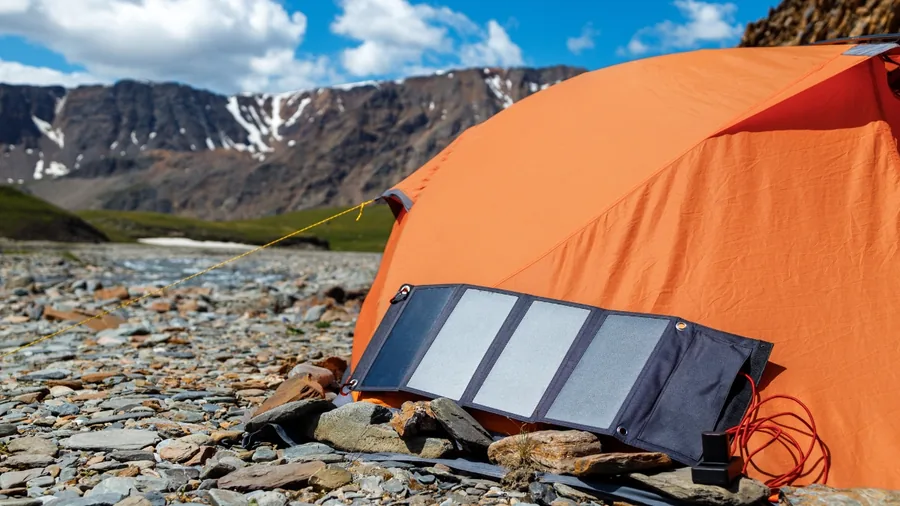
These suit travellers carrying a phone and a few small electronics. Look for regulated USB output, a practical way to position the panel, and compatibility with your power bank. A folding panel in roughly the 20–40W range is a reasonable category to investigate for this job, not a guaranteed daily yield.
Portable panels for car camping
A folding 100–200W panel is a useful starting category when charging a portable power station. It gives you more collection area without committing to a permanent vehicle installation. Check its unfolded footprint as carefully as its packed dimensions.
Rigid panels for an RV or longer stay
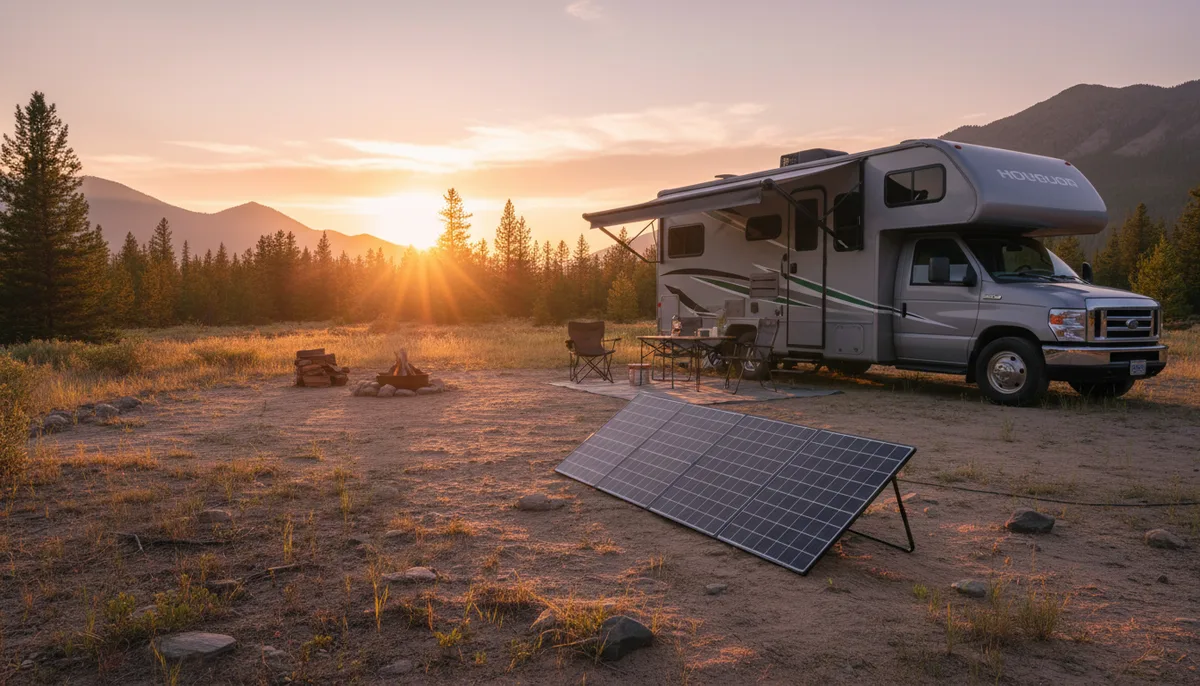
Rigid panels make sense when you have room to transport them or intend to mount them properly. They are less convenient to squeeze into a crowded hatchback, but a stable frame can make positioning easier. Permanent mounting introduces additional questions about roof attachments, cable routing, and weather sealing.
A Real Product Example to Compare
The Goal Zero Nomad 100 illustrates what to check on a larger folding panel. Its manufacturer lists a 100W rating, a 4.6kg weight, and a blue 8mm solar output. Those details tell you about carrying weight and connections; they do not guarantee compatibility with every power station.
Treat it as a comparison point, not a universal winner. Read the specification sheet for your exact model and the input requirements of your battery system before buying an adapter or assuming two connectors will work together.
Understand What the Wattage Means
A 100W label does not promise 100 watts from breakfast until dinner. Panel angle, clouds, shade, temperature, and the equipment accepting the charge all affect the result. You also need to distinguish daylight hours from equivalent full-sun hours.
For an illustrative calculation, suppose a 100W panel receives four equivalent full-sun hours and your overall collection allowance is 75 percent. The estimate is 100 × 4 × 0.75, or 300 Wh. Those are planning assumptions, not a forecast for your next trip.
Repeat the calculation with two full-sun hours and you get 150 Wh. That difference is why a setup that feels generous in a sunny clearing can struggle under trees.
Match the Panel to the Battery System
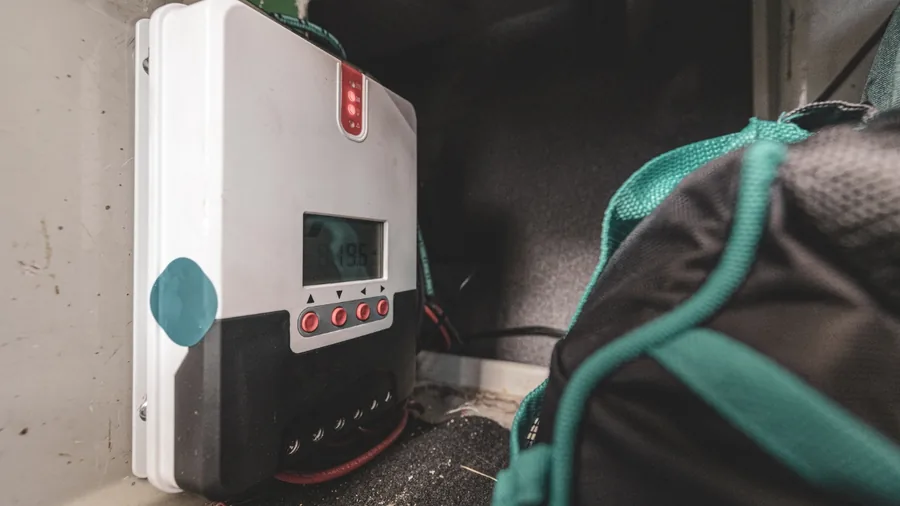
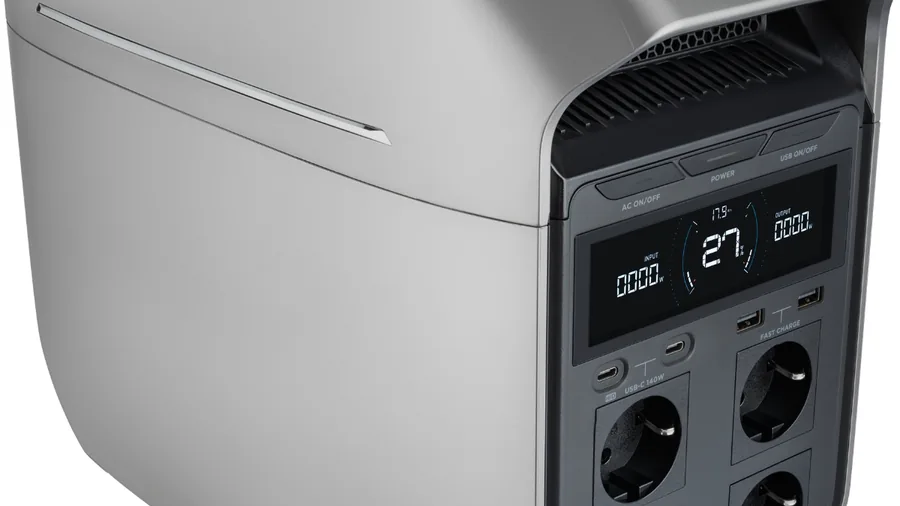
A panel produces electricity; it does not necessarily store it or make it ready for every appliance. A portable power station usually handles charging internally, while a standalone leisure battery normally needs a suitable charge controller.
Check the panel's open-circuit voltage, operating voltage, current, connector, and polarity against the receiving equipment's limits. A connector that physically fits is not enough. Extra wattage cannot fix a voltage mismatch.
For small electronics, REI's portable-power guide discusses charging a power bank rather than relying on uninterrupted direct phone charging. That arrangement is particularly convenient when you want to leave the panel outside and use stored energy later.
The Best Setup Depends on Your Campsite
For a weekend with minimal phone use, a charged power bank may be simpler than carrying a panel at all. Solar becomes more useful when the trip is longer, your consumption is higher, or you regularly return to a sunny base camp.
For a shaded campground, a portable panel with a suitable extension cable can let you park in comfort while collecting power nearby. Keep cable length and sizing within the equipment's guidance, and route it away from footpaths.
For an RV with larger daily loads, start with an energy budget rather than buying a single panel and hoping. Our guide to sizing solar for an RV battery walks through that calculation.
Look Beyond the Panel Itself
Check what is included. Some packages need a separate cable, controller, adapter, or mounting accessory. Compare the complete working setup, not just the price of the panel.
Also look at the stand, carrying handle, cable storage, and weather rating. Can you adjust the angle without balancing it against a cooler? Can you pack it without pinching the lead? Does the manufacturer distinguish between a weather-resistant panel and connectors that must stay dry?
These details matter when you are setting up in wind or packing quickly before a drive. A panel that is easy to use is more likely to spend the day collecting energy instead of staying in its bag.
Compare the panel format with folding solar blankets if storage space is tight. For a standalone battery system, also check how charge-controller sizing works before choosing the panel and wiring arrangement.
Frequently Asked Questions
Is 100W enough for camping?
It can be enough for modest charging needs in suitable sunshine. Check daily watt-hours and expected sun exposure rather than using the panel rating alone.
Can a panel run a fridge directly?
Most camping setups use a compatible battery or power station between the panel and fridge. That provides energy when sunlight changes or disappears.
Do I need the same brand of panel and power station?
Not always, but the electrical specifications and connectors must be compatible. Follow the receiving equipment's guidance before mixing brands.